
The Cost of Cute: When “Teddy Bear” Cavaliers Come at a Price
14 May 2026
Mitral Valve Disease in Cavalier King Charles Spaniels
16 May 2026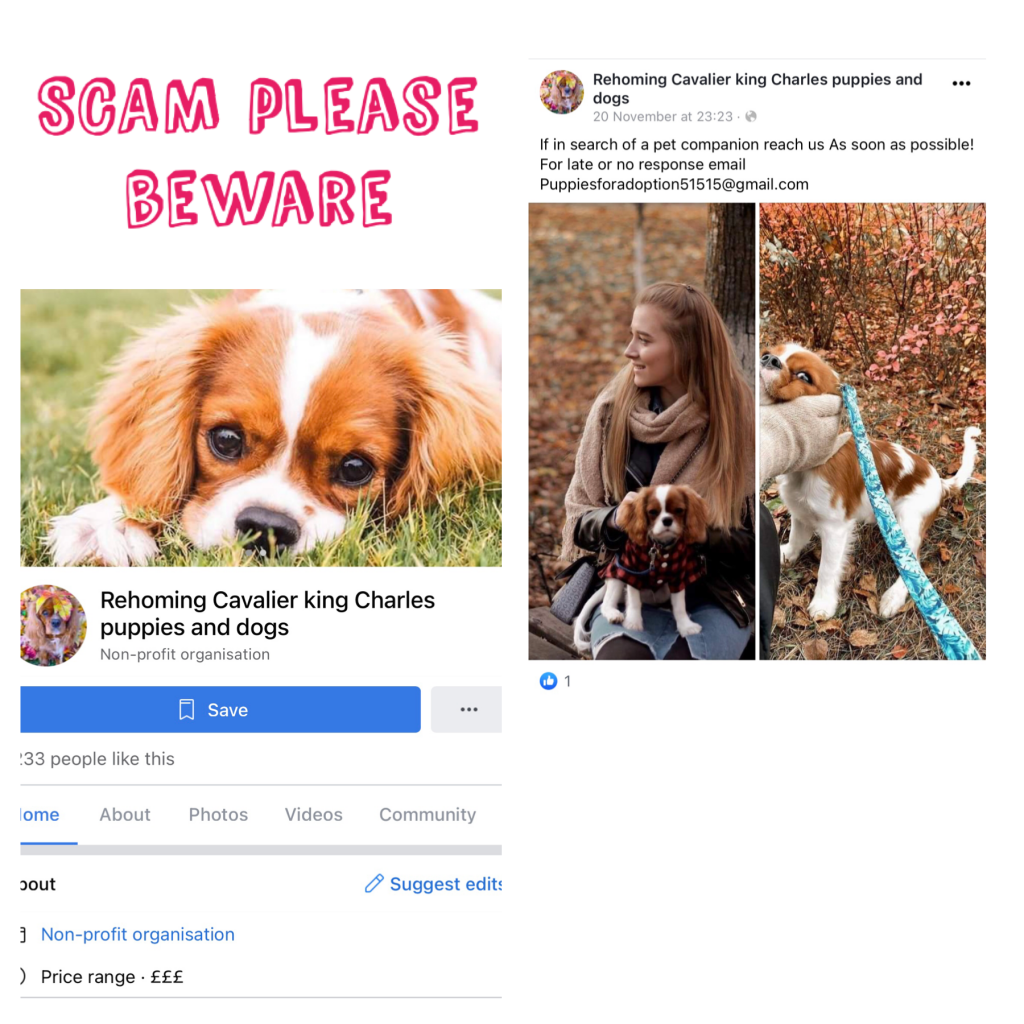
Dog Adoption Scams: How to Spot Fake Rescue Charities and Facebook Rehoming Scams
Sadly, wherever there is demand for dogs, there will always be people willing to exploit it. The same online demand that fuels irresponsible breeding and puppy farming has also created opportunities for increasingly sophisticated rescue and adoption scams. Many of the dogs we take into rescue are themselves linked to poor breeding practices and unethical selling environments.
Over the last few years, fake dog rescue scams have become increasingly common across social media, particularly on Facebook. These scammers prey on people who are simply trying to offer a dog a loving home. They steal photographs, copy genuine rescue posts, impersonate charities, and convince unsuspecting adopters to send money for dogs that do not even exist.
At Bliss Cavalier Rescue, we continue to see this happening regularly. Fake pages still steal our photographs and adoption images, copy wording from our posts, and pretend to represent our rescue. Some even create page names deliberately designed to look similar to genuine Cavalier rescue organisations in the hope people will not notice the difference.
Unfortunately, these scams are becoming more convincing and more sophisticated every year.
How These Scams Usually Work
Most fake rescue scams start with emotion and urgency.
A scammer may advertise a puppy or rescue dog needing a home “as soon as possible”, often with a heartbreaking backstory attached. Sometimes they pretend to be a rescue charity. Other times, they claim they are privately rehoming a dog due to illness, divorce, moving house, or financial difficulties.
Once somebody expresses interest, the conversation quickly moves towards payment.
The scammer may ask for:
- a refundable reservation deposit
- transport costs
- an adoption donation
- holding fees
- emergency veterinary fees
They will often reassure people that the payment is “fully refundable” or claim there is significant interest from other adopters waiting.
Once the money is sent, they disappear.
In most cases, the dog never existed at all.
Fake Rescue Pages Are a Huge Problem on Facebook
One of the biggest concerns in recent years has been the rise in cloned rescue pages.
These fake accounts often look surprisingly convincing at first glance. Scammers steal photographs directly from genuine rescues, copy adoption posts, and sometimes even use real charity registration details taken from legitimate organisations.
We have seen fake pages using Bliss Cavalier Rescue images and pretending to represent our rescue on multiple occasions. Some have even used payment details intentionally designed to look similar to ours.
To somebody excited about adopting a dog, especially a specific breed they have been searching for, it can be very easy to miss the warning signs.
That is exactly what scammers rely on.
A Real Example of How Fake Facebook Groups Build Trust
 Many fake dog adoption groups rely on emotional engagement and social proof to appear trustworthy. A recent example involved a Facebook group using stolen Cavalier photographs while posting obviously misleading content, including claims that a very young-looking dog was celebrating its 17th birthday.
Despite multiple warning signs, the post attracted large numbers of positive comments and engagement.
This is exactly how scam pages create legitimacy. When people see others interacting positively with a post, they are more likely to trust the page themselves.
Most of the posts are made to recruit new group or page followers, but they won’t openly be offering puppies for sale. They will instead be waiting for the engagement to increase.
Scammers understand this psychology extremely well. Cute photographs, emotional stories, birthday posts, rescue pleas, and urgent rehoming appeals are all designed to encourage emotional reactions rather than careful verification.
It is pretty unbelievable that more than 68,000 people are members of this scam Facebook group.
How Scammers Use Facebook Groups to Identify Potential Victims
Increasingly, fake rescue groups are not simply posting direct scam adverts. Instead, they create highly emotional posts designed to generate trust, sympathy, and engagement within large Facebook communities.
 These posts often feature dramatic rescue stories, sentimental language, and photographs designed to provoke emotional reactions. Members who comment expressing interest in helping or adopting may then be contacted privately by admins or associated accounts.
In many cases, these groups avoid answering basic transparency questions publicly, such as:
- where they are based
- whether they are registered
- how their adoption process works
- who their veterinary partners are
Some groups also appear to recycle stories, reuse images, or post inconsistent information across multiple pages and breeds.
These posts may not directly ask for money publicly because the goal is to:
- generate emotional engagement
- identify emotionally responsive people
- move them into private messages
The comments are basically a lead-generation funnel.
The replies on this Facebook post:
- “I’d love to have him”
- “I’ll give him a great home”
- emotional reactions
- sympathy
- rescue instinct
That immediately tells the admins: this person is emotionally invested and potentially vulnerable to a scam approach.
And then the likely next step is:
- DM from admin/moderator
- “the dog is still available”
- “message privately”
- “small refundable deposit”
- “transport fee”
- “application fee”
- “we’re overwhelmed with interest”
Why Genuine Rescues Do Not Rush Adoptions
One thing many scammers do very well is make legitimate rescues look “too strict”.
They may tell people:
- “We do not need a home check”
- “You sound perfect already”
- “We just want the dog gone quickly”
- “Other rescues make things too difficult”
In reality, proper rescue procedures exist to protect dogs.
A reputable rescue should ask questions about:
- your lifestyle
- working hours
- other pets
- children in the home
- experience with dogs
- garden security
- expectations and compatibility
Good rescues also assess the dogs carefully before adoption. Responsible rescue is not simply about finding a home quickly. It is about finding the right home for both the dog and the adopter. Lifestyle, experience, children, working hours, existing pets, and behavioural compatibility all matter when trying to create successful long-term placements.
At Bliss Cavalier Rescue, dogs first go into foster homes where they can be properly assessed medically and behaviourally before being matched to the most suitable home. That process takes time, but it helps prevent failed placements and ensures adopters fully understand the needs of the dog they are welcoming into their family.
A rescue willing to hand over a dog immediately, with little discussion and a request for quick payment, should raise serious concerns.
Common Warning Signs of a Fake Dog Rescue
While scams are becoming more sophisticated, there are still some common patterns that appear again and again.
One of the biggest red flags is pressure. Scammers want people to act emotionally and quickly before they have time to verify anything properly. They may claim there are “lots of people waiting” or insist payment is needed immediately to secure the dog.
Another warning sign is the lack of any meaningful adoption process. Genuine rescues do not hand over dogs after a few Facebook messages and a PayPal payment.
The social media pages themselves are often revealing too. Many fake rescue pages are only recently created, have very few genuine interactions, or contain photographs that look inconsistent or strangely professional. Increasingly, scammers are also using AI-generated puppy images alongside stolen photos from real owners and rescues.
Communication can also be a clue. Most legitimate rescues communicate through official websites, application forms, email addresses, and telephone calls. Scammers often try to keep everything within Messenger or WhatsApp and may avoid speaking directly on the phone altogether.
The Importance of Checking Payment Details
Another major warning sign is the payment information being provided.
Scammers often use random personal email addresses or accounts that do not match the name of the rescue organisation they claim to represent. Some deliberately create addresses very similar to genuine charities in the hope that people will not notice the difference.
The ONLY official PayPal address used by Bliss Cavalier Rescue is:
If you are ever unsure whether you are speaking to the genuine rescue, always contact us directly through our official website rather than through social media messages alone.
How To Check Whether a Rescue Is Genuine
Before sending money or arranging to adopt a dog, it is always worth taking a little extra time to verify the organisation properly.
Look for:
- a professional website
- clear adoption procedures
- realistic information about the dogs
- consistent branding and contact details
- evidence of real rescue work over time
- genuine interaction on social media
You should also be cautious if:
- the rescue avoids home checks
- the process feels rushed
- payment is requested unusually early
- communication feels evasive
- you are being pressured emotionally
Trust your instincts. If something feels off, there is usually a reason.
What To Do If You Think You Have Been Scammed
If you believe you have encountered a fake rescue page or have already sent money to a scammer, stop communication immediately and report the account to the platform involved.
You should also contact:
- your bank or PayPal
- Report Fraud (formerly Action Fraud)
- the genuine rescue being impersonated
Reporting scams quickly can help prevent other people from being targeted in the same way.
Why Taking Your Time Matters
Most genuine rescue charities are run by people working tirelessly to help vulnerable dogs. They are not trying to make adoption difficult or frustrating. Their processes exist because responsible rescue work requires care, assessment, honesty, and safeguarding.
Scammers exploit compassion and urgency. They know people become emotionally attached very quickly when they see a dog they want to help.
If you are ever unsure, slow the process down. Ask questions. Verify everything carefully. A genuine rescue will always understand why you want reassurance before sending money or committing to adoption.
And most importantly, remember that no responsible rescue charity should ever pressure you into rushing such an important decision.
Online Dog Scam FAQ
Can a genuine dog rescue ask for a deposit?
Some rescues may request an adoption donation once checks and approval have been completed, but reputable rescues should never pressure people into sending money immediately just to “reserve” a dog. Be cautious of anybody demanding urgent payment before a proper application process or home check has taken place.
How can I check if a dog rescue charity is genuine?
Look for a professional website, clear adoption procedures, transparent contact details, and evidence of real rescue work over time. Genuine rescues should be happy to answer questions about where they are based, how their process works, and what support they provide to dogs in their care.
Are Facebook dog adoption groups safe?
Some Facebook groups are genuine, but unfortunately many fake rescue pages and scam groups now operate through social media. Always verify the organisation independently before sending money or arranging to adopt a dog.
What are the warning signs of a fake rescue page?
Common warning signs include rushed adoptions, emotional pressure, requests for payment upfront, vague or inconsistent information, newly created Facebook pages, and refusal to carry out proper home checks or speak on the phone.
Why do reputable rescues carry out home checks?
Home checks help ensure dogs are matched safely and responsibly to suitable homes. Good rescues assess factors such as lifestyle, experience, children, other pets, and garden security to reduce the risk of failed placements and protect the welfare of the dog.
What should I do if I think I have been targeted by a scam?
Stop communication immediately and do not send any further money. Report the page or account to the platform involved, contact your bank or PayPal, and report the incident to Report Fraud. If a genuine rescue is being impersonated, let them know as well.