Could Your Cavalier’s Sleep Problems Be a Sign of Pain?
9 June 2026
Ruby’s Last Chance: A Splenectomy and Bone Marrow Biopsy
1 August 2026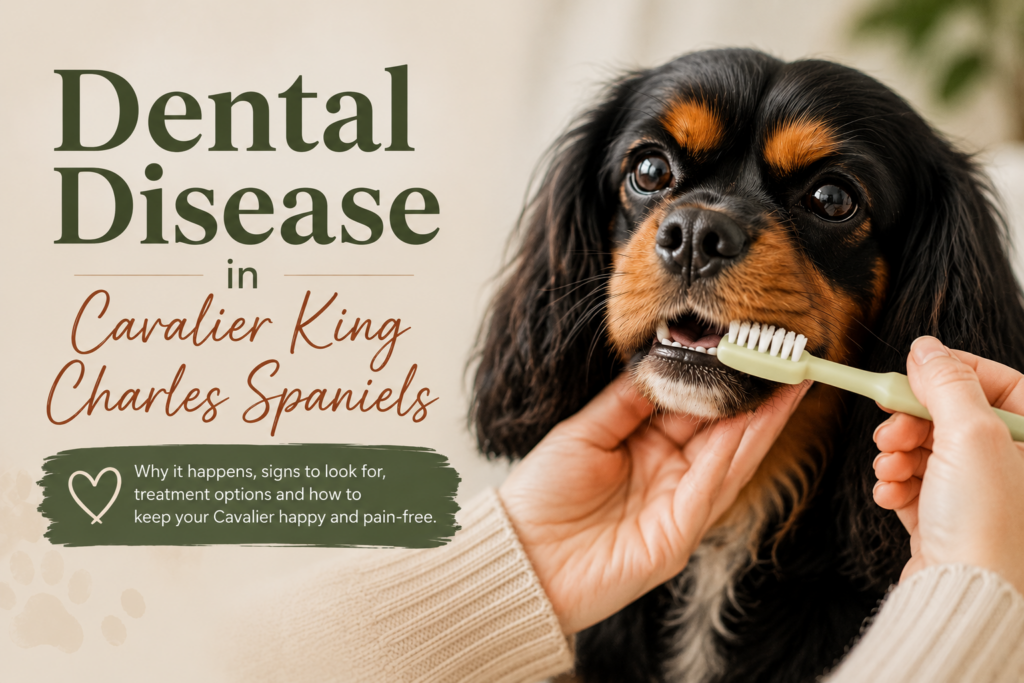
Dental Disease in Cavalier King Charles Spaniels
Why Cavaliers are prone to dental disease – and why “they’re still eating” doesn’t mean they’re not in pain
If you’ve ever owned a Cavalier King Charles Spaniel, you’ve probably heard someone say:
“Cavaliers just have bad teeth.”
Unfortunately, there is some truth to that.
Dental disease is one of the most common health problems seen in the breed. Many Cavaliers will require multiple professional dental procedures during their lifetime, and some will eventually lose many, or even all, of their teeth.
While this can sound frightening, the good news is that dental treatment can dramatically improve a dog’s comfort and quality of life.
Why are Cavaliers so prone to periodontal disease?
There isn’t one single cause.
Instead, Cavaliers appear to have a combination of factors working against them.
These include:
- Small jaws with crowded teeth
- Plaque and tartar building up more quickly
- Genetics
- Retained baby teeth in some dogs
- Difficulty cleaning between closely packed teeth
Because the teeth are so close together, bacteria can easily collect below the gumline, where owners can’t see it.
Over time, this causes inflammation, infection and eventually destruction of the tissues that support the teeth.
What exactly is periodontal disease?
Periodontal disease is an infection affecting the gums and the structures holding the teeth in place.
It usually develops slowly.
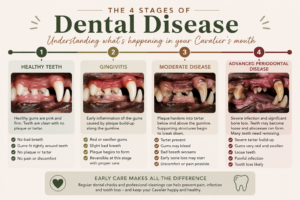
Stage 1 – Gingivitis
The gums become red and inflamed.
At this stage, the damage is still reversible.
Stage 2 – Early periodontal disease
Plaque and bacteria begin damaging the supporting tissues around the teeth.
Stage 3 – Moderate periodontal disease
Bone loss develops.
The teeth may become loose and painful.
Stage 4 – Advanced periodontal disease
Severe infection.
Loose teeth.
Abscesses.
Bone destruction.
Many teeth now need to be extracted.
Unfortunately, many Cavaliers are first seen by a vet when they have already reached Stage 3 or 4.
Does periodontal disease hurt?
Yes.
In fact, severe dental disease is widely recognised as one of the most painful chronic conditions affecting dogs.
Think about the last time you had toothache.
Perhaps you couldn’t sleep.
Eating became uncomfortable.
Even breathing cold air hurts.
Now imagine having several infected teeth… every single day… but never being able to tell anyone.
That is the reality for many dogs with advanced periodontal disease.
But my Cavalier is still eating…
This is probably the biggest misconception we hear.
Dogs do not stop eating simply because they have tooth pain.
In the wild, refusing food isn’t an option.
Instead, many dogs continue eating despite significant discomfort.
Your Cavalier may:
- Eat more slowly
- Swallow food whole
- Chew on one side
- Drop biscuits occasionally
- Prefer softer food
- Avoid certain chews
Or…
They may appear completely normal.
Many Cavaliers continue wagging their tails, playing and eating while living with severe dental pain.
That doesn’t mean they’re comfortable.
It means they’re incredibly stoic.
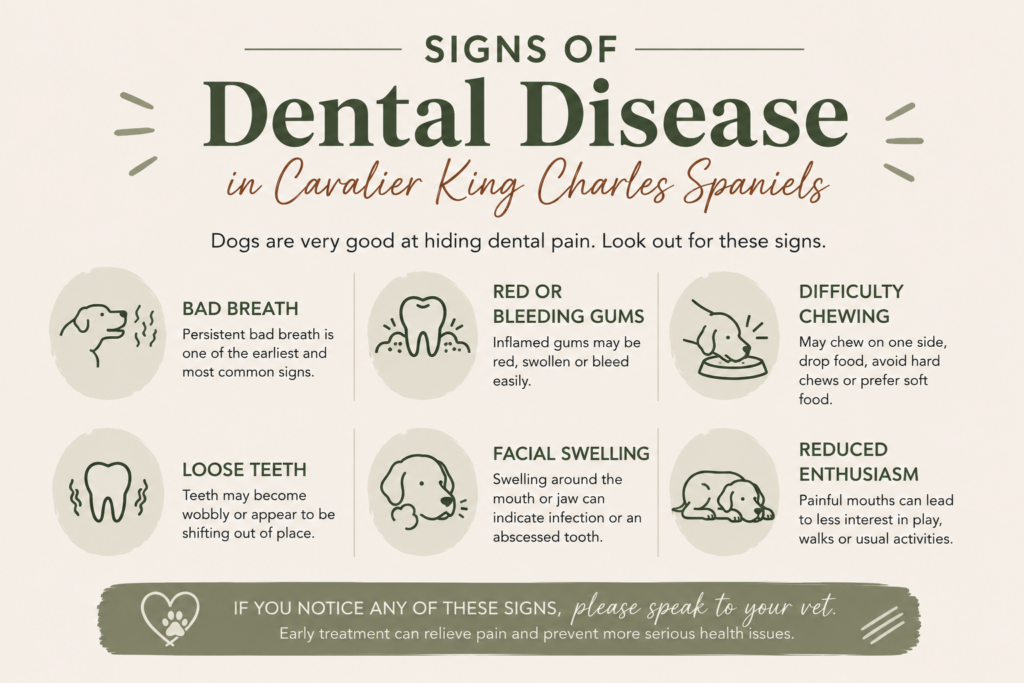
Signs your Cavalier could have dental disease
Bad breath is usually the first sign owners notice.
Other signs include:
- Red gums
- Brown tartar
- Bleeding gums
- Loose teeth
- Facial swelling
- Pawing at the mouth
- Dropping food
- Reduced interest in chewing
- Weight loss
- Nasal discharge (occasionally)
Some dogs show almost no obvious signs until the disease is advanced.
Can dental disease affect the rest of the body?
Yes.
The mouth contains millions of bacteria.
When severe periodontal disease develops, bacteria can enter the bloodstream.
Chronic inflammation has been associated with damage to organs including:
- Heart
- Kidneys
- Liver
While good dental care won’t prevent every disease, reducing chronic infection is an important part of maintaining overall health.
My Cavalier has a heart murmur. Is a dental safe?
This is one of the questions we are asked most often.
The answer is:
In many cases, yes.
Many Cavaliers develop mitral valve disease as they age.
Having a heart murmur does not automatically mean dental treatment is too risky.
In fact, leaving severe infection untreated may carry greater long-term health consequences.
Your vet may recommend:
- Blood tests beforehand
- An echocardiogram if appropriate
- Tailored anaesthetic drugs
- Careful monitoring throughout the procedure
- Intravenous fluids where suitable
Many dogs with stable heart disease undergo successful dental procedures every day.
The decision should always be made after weighing the risks against the risks of leaving a painful, infected mouth untreated.
Is my dog too old for a dental?
Age alone is not a disease.
We regularly hear owners say:
“He’s 13… isn’t he too old?”
The better question is:
Is your dog healthy enough for an anaesthetic?
Many older Cavaliers safely undergo dental treatment after appropriate pre-operative assessment.
Modern veterinary anaesthesia is far safer than many people realise.
Blood tests, careful drug selection and close monitoring allow many senior dogs to have procedures that greatly improve their comfort and quality of life.
Will my Cavalier cope without lots of teeth?
Absolutely.
This often surprises owners.
Dogs do not chew food in the same way humans do.
Many Cavaliers who have multiple teeth extracted go home happier than they’ve been for months.
Owners commonly report that their dog becomes:
- More playful
- Brighter
- More affectionate
- Happier to eat
- More energetic
That’s because the chronic pain has finally gone.
Can periodontal disease be prevented?
Although Cavaliers are genetically predisposed, you can slow the progression significantly.
We recommend:
- Daily tooth brushing where possible
- Regular veterinary dental examinations
- Professional dental cleaning when advised
- Early treatment before the disease becomes severe
- Dental diets or approved dental chews if appropriate
The earlier the disease is treated, the better the long-term outcome.
The most important thing to remember
If your Cavalier has bad teeth but still seems happy…
Don’t assume they aren’t in pain.
Dogs are remarkably good at hiding discomfort.
Periodontal disease is common in Cavaliers, but it should never simply be accepted as “normal.”
Cavalier Dental Disease FAQ
Is dental disease common in Cavalier King Charles Spaniels?
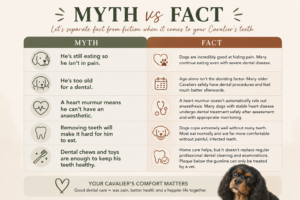
Yes. Unfortunately, Cavaliers are one of the breeds most commonly affected by dental disease. Their small jaws and crowded teeth allow plaque and bacteria to build up more easily, making regular dental care especially important. Many Cavaliers will require professional dental treatment several times during their lives.
My Cavalier still eats normally. Could they still have tooth pain?
Absolutely.
Dogs are incredibly good at hiding pain, and many continue eating despite severe dental disease. Unlike people, they rarely stop eating because of toothache. They simply adapt by chewing differently or swallowing food whole. A dog that is eating well can still be living with significant dental pain.
Is it safe for a Cavalier with a heart murmur to have a dental procedure?
In many cases, yes.
A heart murmur does not automatically rule out anaesthesia. Your vet may recommend blood tests, an echocardiogram or other investigations beforehand to assess the level of risk. Modern anaesthetic monitoring means many Cavaliers with stable heart disease can safely undergo dental treatment. The risks of untreated infection and chronic pain should always be weighed against the risks of anaesthesia.
Is my Cavalier too old for a dental?
Age alone is not a reason to avoid dental treatment.
Many senior Cavaliers benefit enormously from having painful, infected teeth removed. Your vet will assess your dog’s overall health rather than simply their age. Blood tests and a full examination help determine whether anaesthesia is appropriate.
Will my Cavalier be able to eat if lots of teeth need removing?
Yes. Most dogs cope remarkably well after multiple tooth extractions and often feel much happier once the painful teeth have been removed. Many owners tell us their dog seems brighter, more playful and enjoys eating more after recovering from surgery because they are no longer living with constant dental pain.