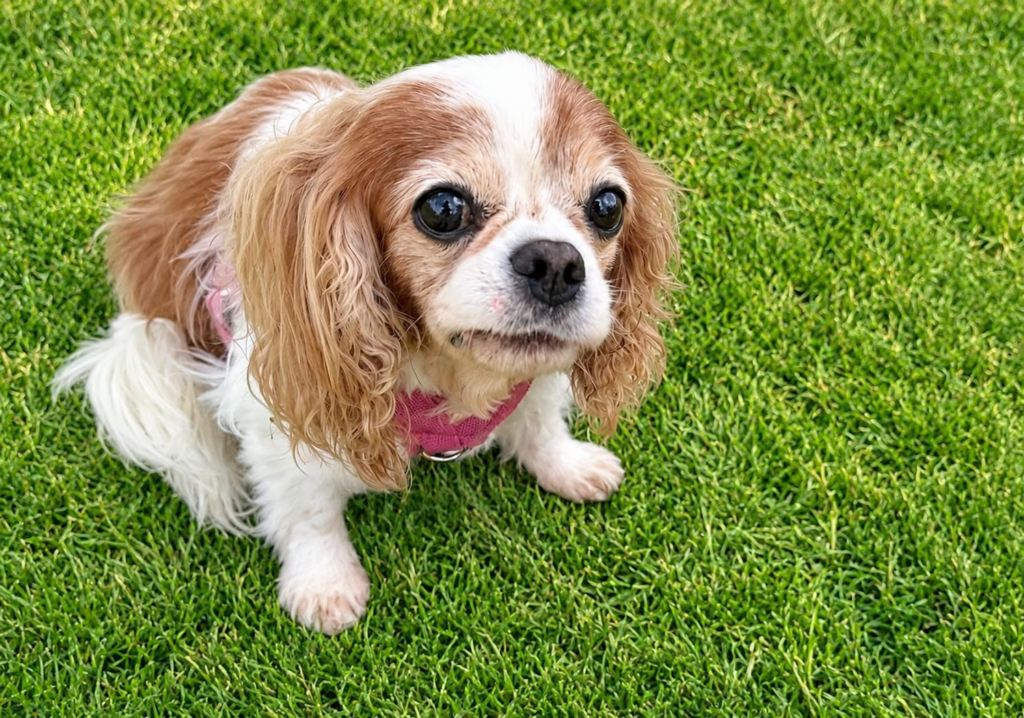
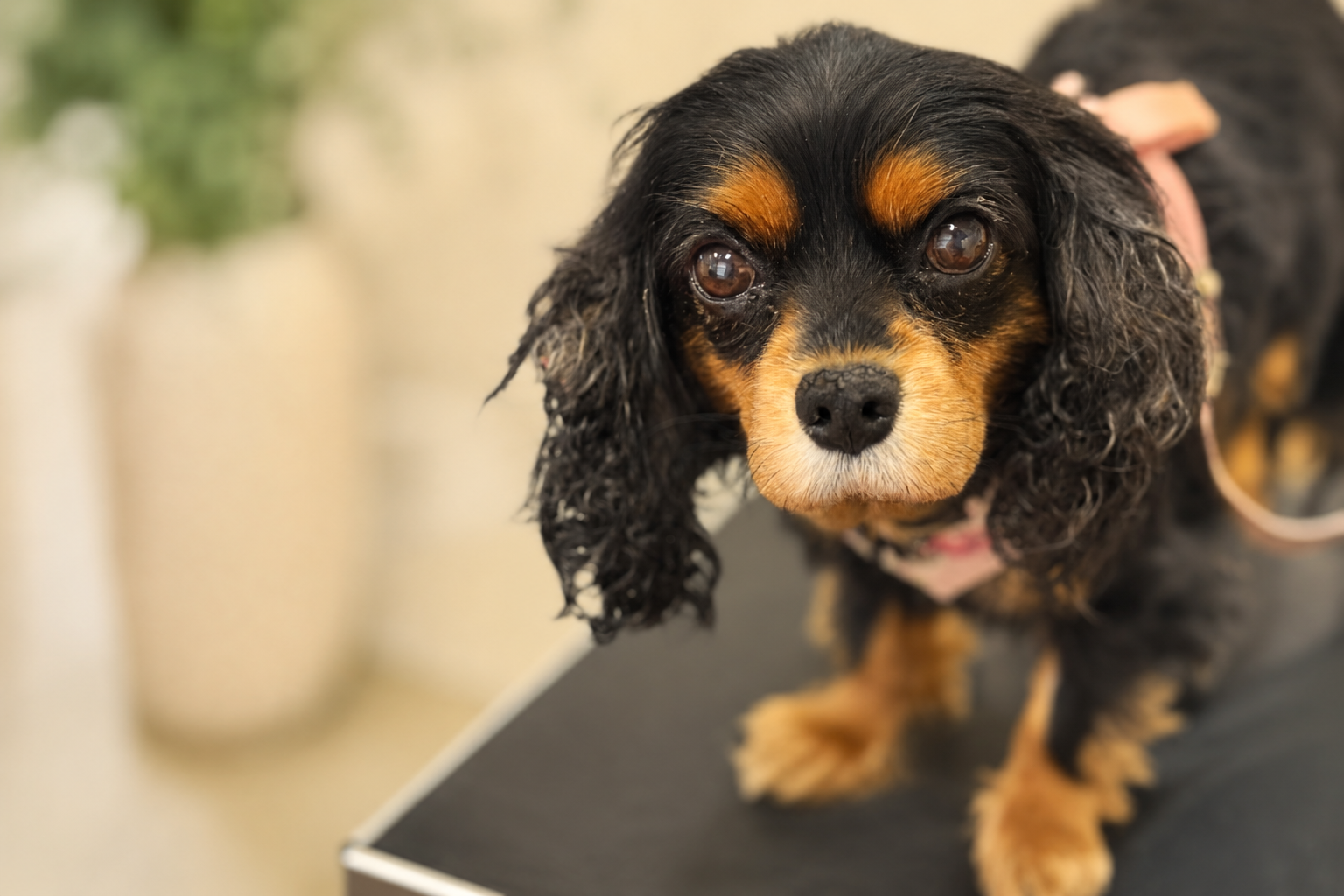
Older black and tan Cavalier King Charles Spaniel rescue named Elsie with Stage B2 mitral valve disease (MVD), standing calmly during a veterinary visit.
Mitral Valve Disease in Cavalier King Charles Spaniels
16 May 2026
Gallbladder Disease in Cavalier King Charles Spaniels

An Increasingly Recognised Problem in Cavaliers

Gallbladder disease is something we are becoming increasingly aware of within the Cavalier King Charles Spaniel breed, and much of what we have learned has come from an unexpected direction.

Many of the cases seen within our rescue were not initially being investigated for gallbladder problems at all. Instead, abnormalities were first spotted by chance during routine echocardiograms carried out for heart disease monitoring. When scanning Cavaliers for mitral valve disease, the gallbladder can occasionally come into view depending on the angle and position of the ultrasound probe, and over time, our vets began noticing a surprising number of abnormalities in dogs that had attended purely for cardiac assessment.

Finding Cases by Chance During Heart Scans

Because Cavaliers routinely undergo echocardiograms for mitral valve disease monitoring, gallbladder abnormalities in our rescue dogs have often been identified incidentally during cardiac workups rather than because a dog was showing obvious digestive symptoms. Once these changes started being noticed more frequently, further abdominal ultrasounds and investigations were arranged.

What followed was sobering. While some cases were mild, stable sludge discovered entirely by chance in dogs that appeared otherwise well, others were far more serious than anyone had anticipated. Several dogs were found to have significant sludge build-up, thickened or immobile bile, gallbladder wall changes, elevated liver enzymes, or signs consistent with pancreatitis. In a small number of cases, the findings were severe enough to require prompt treatment, and a few dogs had advanced disease changes that would not have been identified without that incidental scan.

This pattern, serious gallbladder disease in dogs attending for an unrelated reason, with no obvious outward signs, has shaped how we now approach gallbladder health within our rescue. It has also reinforced our belief that abdominal ultrasound, not just cardiac scanning, has an important role to play in the routine health assessment of Cavaliers.

Many Dogs Can Be Managed Medically

One of the most important things owners should understand is that a gallbladder diagnosis does not automatically mean emergency surgery or a poor prognosis.

Many Cavaliers can be medically managed successfully for long periods of time using combinations of:

  • low-fat diets
  • ursodeoxycholic acid (UDCA/Destolit)
  • liver support supplements
  • pancreatitis management
  • regular monitoring and repeat ultrasound scans

Some of the dogs within rescue had fairly significant gallbladder changes at diagnosis, yet still responded well to medical management and ongoing monitoring.

Research Is Beginning to Support What Vets Are Seeing

Research is now beginning to suggest that Cavaliers may be predisposed to certain gallbladder and biliary diseases, including gallbladder sludge and gallstones (cholelithiasis). There also appears to be an overlap with pancreatitis, inflammatory disease, and abnormal lipid metabolism in some dogs.

As awareness grows, more Cavaliers are being diagnosed earlier, often before severe symptoms develop. This is important because early monitoring and treatment may help reduce the risk of complications and improve long-term quality of life.

What Does the Gallbladder Actually Do?

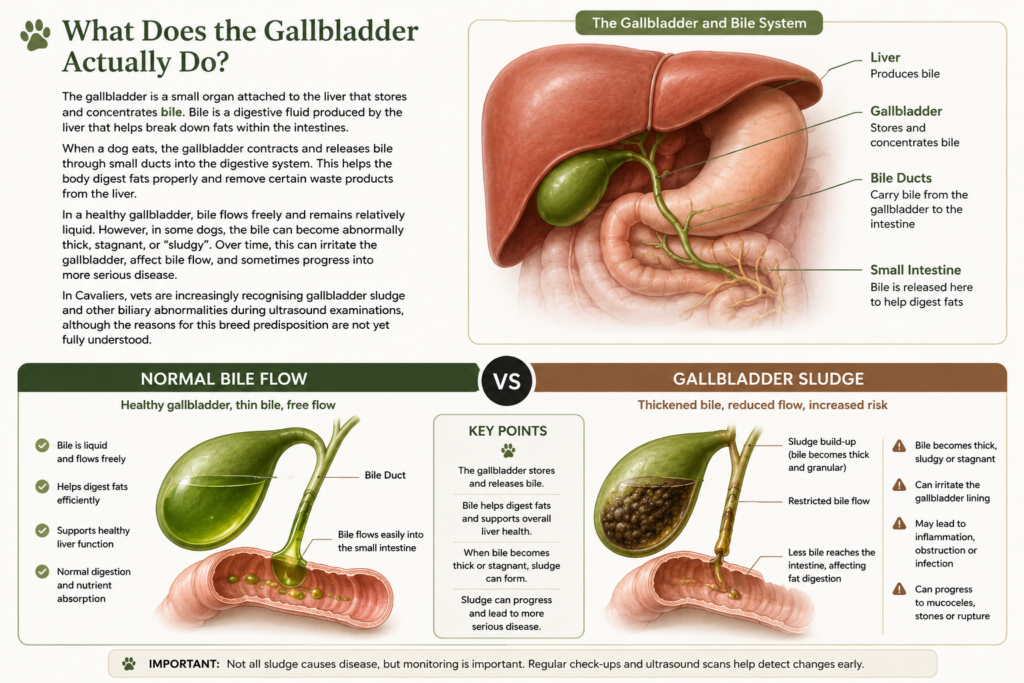
The gallbladder is a small organ attached to the liver that stores and concentrates bile. Bile is a digestive fluid produced by the liver that helps break down fats within the intestines.

When a dog eats, the gallbladder contracts and releases bile through small ducts into the digestive system. This helps the body digest fats properly and remove certain waste products from the liver.

In a healthy gallbladder, bile flows freely and remains relatively liquid. However, in some dogs, the bile can become abnormally thick, stagnant, or “sludgy”. Over time, this can irritate the gallbladder, affect bile flow, and sometimes progress into a more serious disease.

In Cavaliers, vets are increasingly recognising gallbladder sludge and other biliary abnormalities during ultrasound examinations, although the reasons for this breed predisposition are not yet fully understood.

Infographic explaining gallbladder function and bile flow in dogs, comparing a healthy gallbladder with normal bile flow to gallbladder sludge in Cavalier King Charles Spaniels, including labelled anatomy of the liver, gallbladder, bile ducts, and digestive system.

Gallbladder Sludge in Cavaliers

Gallbladder sludge is one of the most common gallbladder abnormalities currently being identified in Cavaliers during ultrasound examinations.

The term “sludge” refers to thickened bile that has become more concentrated and stagnant within the gallbladder. On ultrasound, this often appears as cloudy, grainy, or layered material sitting within the gallbladder rather than flowing freely as normal liquid bile would.

Importantly, not all sludge causes immediate illness or requires surgery. In some Cavaliers, mild sludge may remain relatively stable for long periods of time and may even be discovered completely by chance during scans for unrelated conditions such as heart disease.

However, in other dogs, sludge can become thicker and more problematic over time. More advanced sludge may irritate the gallbladder lining, affect bile flow, contribute to inflammation, or increase the risk of complications such as gallbladder mucoceles, gallstones, infection, or rupture.

One of the difficulties is that the severity of ultrasound findings does not always perfectly match how the dog appears clinically. Some Cavaliers with significant sludge may initially show very few symptoms, while others become unwell with vomiting, pain, pancreatitis, lethargy, or reduced appetite.

Because of this, many vets now recommend ongoing monitoring of sludge through repeat ultrasounds, blood tests, and clinical assessment rather than relying on a single scan alone.

Veterinary debate still exists around how significant biliary sludge is in every individual dog. Some specialists consider mild sludge to be an incidental finding in certain cases, while others believe sludge may contribute to progression toward more serious gallbladder disease in some predisposed breeds.

A retrospective UK study involving Penny Watson examined dogs with both biliary sludge and gallbladder mucoceles and identified Cavalier King Charles Spaniels within both groups. The study also documented one dog progressing from sludge to a gallbladder mucocele over time, supporting concerns that sludge may not always be entirely benign in at-risk dogs.

Symptoms to Watch For

🤢

Vomiting

Repeated vomiting or nausea can occur during flare-ups or pancreatitis episodes.

🥱

Lethargy

Some dogs become unusually quiet, tired, withdrawn, or less interested in normal activities.

🍗

Reduced Appetite

A reduced appetite or reluctance to eat can sometimes indicate abdominal discomfort or nausea.

🐕

Abdominal Pain

Dogs may appear uncomfortable, tense, hunched, or sensitive around the abdomen.

💩

Diarrhoea

Digestive upset and diarrhoea may occur alongside gallbladder inflammation or pancreatitis.

🟡

Jaundice

Yellowing of the gums, skin, or eyes can occur if bile flow becomes severely affected.

Why Are Cavaliers Predisposed to Gallbladder Disease?

Although research into gallbladder disease in Cavaliers is still developing, growing evidence suggests the breed may be predisposed to certain biliary and gallbladder disorders compared to the wider dog population.

Veterinary researchers have published work involving gallbladder disease and gallstones (cholelithiasis) in Cavalier King Charles Spaniels, helping draw attention to the breed’s apparent overrepresentation in some cases.

At the moment, the exact reason for this predisposition is not fully understood. However, several possible contributing factors are being explored, including:

  • abnormal bile composition
  • impaired gallbladder emptying
  • inflammatory disease
  • lipid metabolism abnormalities
  • chronic pancreatitis
  • endocrine disease
  • breed-specific genetic factors

One particularly interesting pattern seen both in research and in clinical practice is the overlap between gallbladder disease and pancreatitis in Cavaliers. Many affected dogs appear to have a history of pancreatitis, elevated triglycerides, digestive sensitivity, or chronic inflammatory disease alongside gallbladder abnormalities.

Within rescue, we have also seen a surprising number of Cavaliers with gallbladder sludge discovered incidentally during heart scans, even in dogs that were not initially showing obvious digestive symptoms. This raises interesting questions about how common mild or early gallbladder disease may actually be within the breed.

As awareness increases and more Cavaliers undergo abdominal ultrasound examinations, vets are likely identifying gallbladder disease earlier and more frequently than in the past.

Endocrine Disease and Gallbladder Risk

In the wider veterinary literature, certain hormonal (endocrine) diseases are also strongly associated with gallbladder mucoceles and biliary disease in dogs.

One of the most significant associations is hyperadrenocorticism (Cushing’s disease). Studies have shown that dogs with Cushing’s disease have a dramatically increased risk of developing gallbladder mucoceles compared to the general dog population. The exact reasons are still being investigated, but altered bile composition, impaired gallbladder motility, and metabolic changes are all thought to contribute.

Hypothyroidism has also been linked to an increased risk of gallbladder disease and mucoceles in some dogs, again likely relating to changes in metabolism and bile flow.

Although not every Cavalier with gallbladder disease will have an endocrine disorder, these associations are important because they may influence which additional tests a vet recommends, particularly in dogs with recurrent pancreatitis, elevated triglycerides, unexplained liver changes, or progressive gallbladder abnormalities.

🐾 Did You Know?

Some Cavaliers with quite significant gallbladder sludge may initially show very few symptoms at all. In several dogs within rescue, gallbladder abnormalities were discovered incidentally during routine heart scans rather than because the dogs appeared obviously unwell.

How Is Gallbladder Disease Diagnosed?

Gallbladder disease is most commonly diagnosed using abdominal ultrasound scanning. Ultrasound allows vets to assess the appearance of the gallbladder, the thickness and movement of bile, the gallbladder wall, surrounding inflammation, and whether complications such as mucoceles, obstruction, or rupture may be developing.

In many Cavaliers, gallbladder abnormalities are discovered incidentally during scans performed for other reasons, particularly investigations into pancreatitis, vomiting, or elevated liver enzymes.

Ultrasound findings may include:

  • biliary sludge
  • thickened or immobile bile
  • gallstones (cholelithiasis)
  • gallbladder wall thickening
  • mucoceles
  • bile duct dilation
  • surrounding inflammation

Blood tests are also important and may show:

  • elevated liver enzymes
  • raised bilirubin
  • increased triglycerides
  • inflammatory changes
  • pancreatic abnormalities

Some dogs may also undergo:

  • bile acid testing
  • pancreatic lipase testing
  • repeat monitoring scans
  • referral imaging with internal medicine specialists

Importantly, ultrasound findings do not always perfectly predict how unwell a dog will become. Some Cavaliers with severe sludge may initially appear relatively stable, while others become acutely unwell with gallbladder obstruction.
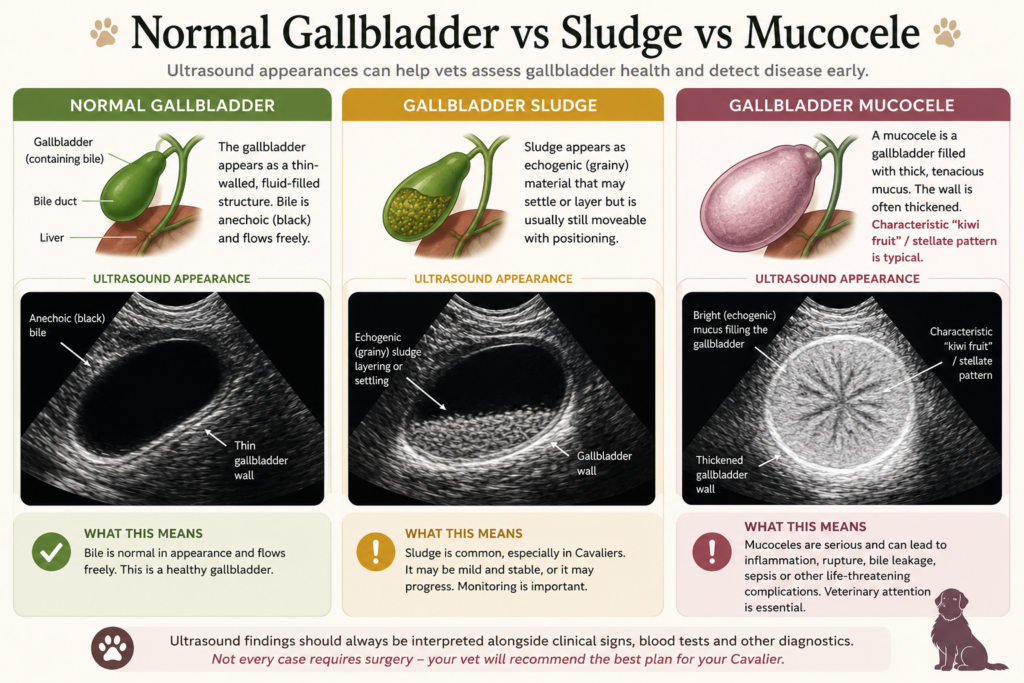
Veterinary infographic comparing a normal gallbladder, gallbladder sludge, and gallbladder mucocele in dogs using labelled ultrasound examples and anatomical illustrations, including the characteristic echogenic “kiwi fruit” or stellate ultrasound pattern seen in gallbladder mucoceles.

Treatment for Gallbladder Disease in Cavaliers

Treatment for gallbladder disease depends on several factors, including the severity of ultrasound findings, the dog’s symptoms, blood test results, whether pancreatitis is also present, and the overall risk of complications such as obstruction or rupture.

Importantly, not every Cavalier with gallbladder sludge or biliary abnormalities requires surgery. Many dogs can be managed medically for long periods of time with careful monitoring and supportive treatment.

Monitoring Mild or Incidental Sludge

Some Cavaliers are diagnosed with relatively mild gallbladder sludge that is discovered incidentally during scans for unrelated conditions. In these cases, the dog may not show any obvious symptoms at all.

Depending on the ultrasound appearance and the dog’s overall health, vets may initially recommend:

  • repeat ultrasound scans
  • regular blood tests
  • monitoring liver values and triglycerides
  • watching for digestive symptoms or pancreatitis flare-ups

Because some cases remain stable for long periods while others progress over time, ongoing monitoring is often very important.

Low-Fat Diets

Low-fat diets are commonly recommended for Cavaliers with gallbladder disease, particularly when pancreatitis or elevated triglycerides are also present.

Reducing dietary fat may help decrease pancreatic stimulation and support healthier bile flow through the biliary system. Many dogs with gallbladder disease also appear to have sensitive digestive systems, making dietary management an important part of long-term care.

Some dogs do well on prescription low-fat veterinary diets, while others may be managed using carefully balanced home-cooked diets under veterinary guidance.

Ursodeoxycholic Acid (UDCA / Destolit)

Ursodeoxycholic acid (UDCA), often prescribed under the brand name Destolit, is one of the most commonly used medications in the medical management of gallbladder disease.

UDCA helps improve bile flow and may reduce bile stagnation within the gallbladder. In some cases, it may also help dissolve or reduce certain types of biliary material and support healthier liver and gallbladder function overall.

Published veterinary case reports involving Cavaliers have described successful medical management of gallstones (cholelithiasis) using UDCA alongside dietary management and careful monitoring.

Antibiotics

Antibiotics are not routinely required for every Cavalier diagnosed with gallbladder sludge. In many dogs, particularly those with mild or incidental sludge, there may be no evidence of bacterial infection at all.

However, some dogs may receive antibiotics if there is concern about secondary infection, cholangitis (inflammation or infection of the bile ducts), infection within the gallbladder itself, fever, marked inflammatory changes, or more severe biliary disease identified on blood tests or ultrasound.

In certain cases, longer antibiotic courses may be prescribed based on the individual dog’s clinical signs, inflammatory markers, ultrasound findings, or culture results. Treatment decisions are therefore usually tailored carefully to the individual patient rather than based on the presence of sludge alone.

Because unnecessary antibiotic use can contribute to antimicrobial resistance, antibiotics are generally not recommended purely as routine preventative treatment for uncomplicated biliary sludge.

Liver & Gallbladder Support Supplements

Some Cavaliers may also receive supportive supplements aimed at supporting liver health and reducing oxidative stress.

These may include:

  • SAMe (S-adenosylmethionine) ie Samylin/ Denamarin
  • milk thistle
  • antioxidant supplements
  • combined liver support products

While supplements do not replace veterinary treatment, they are sometimes used alongside medication and dietary management as part of a broader long-term plan.

When Is Surgery Needed?

In more severe cases, surgery may be required. This is most commonly considered when:

  • a gallbladder mucocele develops
  • bile flow becomes obstructed
  • the gallbladder is at risk of rupture
  • the dog becomes acutely unwell
  • medical management is no longer effective

Gallbladder rupture is a life-threatening emergency and requires urgent veterinary treatment.

However, it is important to remember that many Cavaliers diagnosed with sludge or even more significant gallbladder changes never progress to emergency surgery. Some dogs remain stable for years with careful monitoring, dietary management, and medical treatment.

Can Cavaliers Live Normally With Gallbladder Disease?

Many Cavaliers with gallbladder disease continue to live happy and comfortable lives, particularly when the condition is identified early and managed appropriately.

One of the most important things owners should understand is that gallbladder disease exists on a spectrum. Some dogs may only ever develop mild sludge that remains stable for years, while others experience more significant inflammation, pancreatitis, gallstones, or progression toward gallbladder mucoceles.

Importantly, ultrasound findings do not always predict outcome perfectly. Some dogs with fairly dramatic scan appearances may remain clinically stable for long periods with medical management, while others become symptomatic more quickly.

Within rescue, we have seen multiple Cavaliers respond well to combinations of:

  • low-fat diets
  • UDCA (Destolit)
  • pancreatitis management
  • supportive supplements
  • regular monitoring

Several dogs diagnosed incidentally during heart scans have continued to do well with ongoing medical management and repeat monitoring ultrasounds.

Early diagnosis appears particularly valuable because it allows changes to be monitored before severe complications develop. Increasing awareness within the breed may therefore help more dogs receive treatment before they become acutely unwell.

Although severe gallbladder disease can occasionally become life-threatening, especially if rupture or obstruction occurs, many Cavaliers with sludge or biliary abnormalities can still maintain a very good quality of life for years following diagnosis.

Research & Veterinary Sources

Growing veterinary interest in gallbladder disease in Cavaliers has led to several published case reports and studies involving gallstones (cholelithiasis), biliary disease, pancreatitis overlap, and medical management using ursodeoxycholic acid (UDCA).

Suggested Reading

Frequently Asked Questions About Gallbladder Disease in Cavaliers

Is gallbladder sludge common in Cavaliers?

Gallbladder sludge appears to be increasingly recognised in Cavalier King Charles Spaniels, particularly during ultrasound examinations performed for other conditions such as heart disease or pancreatitis. Research and clinical experience both suggest the breed may be predisposed to certain biliary disorders.


Can gallbladder sludge turn into a mucocele?

Possibly. Not all sludge progresses to more severe disease, and some dogs remain stable for years. However, veterinary studies have documented progression from biliary sludge to gallbladder mucocele in some cases, which is why ongoing monitoring is often recommended in at-risk dogs. The relationship between sludge and mucocele is still debated, some specialists consider them distinct disease processes rather than a simple progression.


Is gallbladder sludge painful?

Some dogs with mild sludge show no symptoms at all, while others may experience nausea, abdominal discomfort, pancreatitis, vomiting, or reduced appetite. The severity of symptoms does not always perfectly match the ultrasound appearance.


Does gallbladder sludge always require surgery?

No. Many Cavaliers with sludge can be managed medically using low-fat diets, UDCA (Destolit), supportive care, and repeat monitoring. Surgery is usually reserved for more severe cases involving mucoceles, obstruction, rupture risk, or dogs that become acutely unwell.


What foods should dogs with gallbladder disease avoid?

Many vets recommend avoiding high-fat foods, fatty treats, greasy table scraps, and sudden dietary changes. Low-fat diets are commonly used, particularly when pancreatitis or elevated triglycerides are also present. Even single high-fat meals can trigger pancreatitis flare-ups in predisposed dogs.


Can pancreatitis and gallbladder disease be linked?

Yes. There appears to be significant overlap between pancreatitis and gallbladder disease in some Cavaliers. Many affected dogs have histories of pancreatitis, digestive sensitivity, or elevated triglycerides alongside gallbladder abnormalities.


What does Destolit (UDCA) do?

Destolit contains ursodeoxycholic acid (UDCA), which helps improve bile flow and reduce bile stagnation within the gallbladder. It is one of the most commonly used medications in the medical management of gallbladder disease in dogs.

UDCA works partly by replacing more toxic bile acids with a gentler form, which may help protect the gallbladder lining and support healthier liver function. There is also some evidence that it may help reduce or dissolve certain types of biliary material in predisposed dogs, including in Cavaliers, published veterinary case reports have described successful medical management of gallstones using UDCA alongside dietary changes and monitoring.

It is worth noting that the evidence base in dogs is still developing, and UDCA is not guaranteed to dissolve all types of sludge or stones. How well an individual dog responds will depend on factors including the type and severity of biliary material present.


What is a gallbladder mucocele?

A gallbladder mucocele is a more severe form of gallbladder disease where thick mucus and bile accumulate within the gallbladder, often creating a characteristic “kiwi fruit” appearance on ultrasound. Severe mucoceles can obstruct bile flow or rupture and may require emergency surgery.


Can Cavaliers live normally with gallbladder disease?

Yes. Many Cavaliers with gallbladder disease continue to live happy and comfortable lives for years with appropriate monitoring, dietary management, medication, and veterinary care.