Let Sleeping Dogs Lie: Why Dogs Growl (And Why It’s Not What You Think)
4 May 2026
Scammers Offering Dogs For Adoption and Posing as Rescue Charities
15 May 2026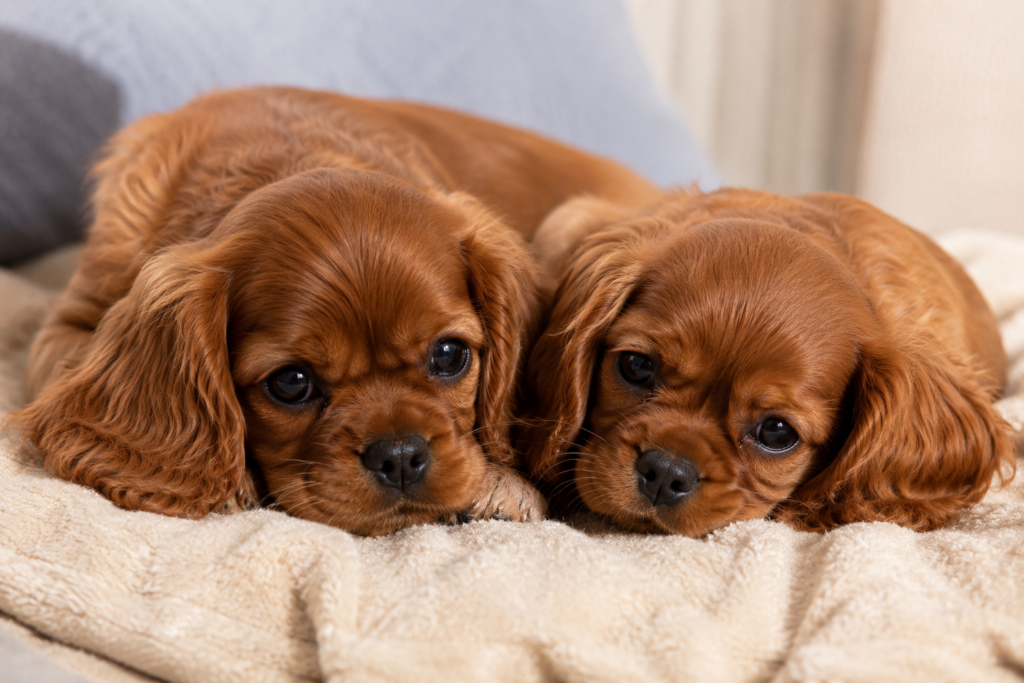
The Cost of Cute: When “Teddy Bear” Cavaliers Come at a Price
There’s a campaign currently being run by Battersea Dogs & Cats Home called The Cost of Cute, highlighting the hidden suffering behind many exaggerated features we now see as “adorable” in dogs and cats.
And honestly, it hits very close to home for Cavalier King Charles Spaniels too.
Cavaliers are not traditionally considered a flat-faced breed in the same way as Pugs or French Bulldogs. However, over the years, demand for increasingly “cute,” baby-like features has significantly influenced the way many Cavaliers are bred and marketed.
Shorter noses.
Rounder heads.
Larger eyes.
More exaggerated “teddy bear” faces.
The problem is that these features are not just cosmetic.
In many cases, they are linked to serious health and welfare consequences, including breathing difficulties, skull structure issues, neurological diseases, eye health problems, dental crowding, and overall reduced quality of life.
And in rescue, we are seeing the consequences every single week.
Cavaliers Were Never Meant to Look Like This
The Cavalier was originally bred as a sporting toy spaniel. If you look at older photographs of the breed, many Cavaliers had:
- longer muzzles
- less exaggerated domed skulls
- better facial proportions
- less protruding eyes
- more moderate overall structure
Over time, public demand shifted towards increasingly infant-like features because humans naturally perceive them as cute and emotionally appealing.
Social media has massively accelerated this.
Photos of Cavaliers with ultra-short faces, huge eyes and rounded “baby” heads often perform extremely well online. Puppies marketed with exaggerated features are becoming increasingly normalised.
But the same features people fall in love with can also contribute to suffering.
That’s the hidden cost.
When “Cute” Starts Resembling Disease
One of the most worrying trends is the increasing exaggeration of skull shape in some Cavaliers being promoted online.
Some dogs now display extremely rounded heads, bulging eyes, pronounced foreheads and shortened facial structure to a degree that many experienced rescuers and veterinary professionals find genuinely concerning.
In some cases, these exaggerated features can resemble those of dogs affected by neurological or developmental abnormalities involving skull and brain formation, including hydrocephalus-like changes. While no diagnosis can or should be made from photographs alone, it raises an important welfare question:
Why are features associated with abnormal skull development becoming desirable aesthetic traits?
That should concern everyone who loves this breed.
The Skull Problem Nobody Wants to Talk About
One of the biggest welfare issues in Cavaliers is Chiari malformation (CM), which is extremely common within the breed.
In simple terms, the skull is often too small or misshapen for the brain. This can disrupt normal cerebrospinal fluid flow and contribute to syringomyelia (SM), where fluid-filled cavities form within the spinal cord.
Dogs can experience:
- chronic pain
- sensitivity around the head and neck
- phantom scratching
- weakness
- sleep disruption
- neurological symptoms
- behavioural changes linked to pain
Importantly, a dog does not need to have a large syrinx to suffer severely.
In rescue, we regularly see Cavaliers living with significant CM pain.
The uncomfortable reality is this:
When breeding increasingly exaggerated “baby-faced” Cavaliers, we are also selecting for altered skull structure.
And skull structure matters.
“He’s Just Snorty” Isn’t Normal
Many people are surprised to learn that Cavaliers can also suffer from BOAS-type breathing problems.
Not usually to the same extent as extreme brachycephalic breeds, but enough that we are increasingly concerned about the direction some lines are heading.
Signs may include:
- snoring
- noisy breathing
- exercise intolerance
- gagging or retching
- overheating
- disturbed sleep
- struggling in warm weather
- chronic upper airway noise
These signs are often dismissed as:
“normal for the breed”
or even worse…
“cute”.
But breathing should never be difficult.
A healthy dog should be able to sleep quietly, exercise comfortably and regulate their temperature normally.
The Reality Rescue Sees
At Bliss Cavalier Rescue, this is not theoretical.
We regularly see young Cavaliers already needing MRI scans, neurological medication, specialist referrals and long term pain management before they have even reached middle age. Some require airway investigations, repeated dental work or lifelong monitoring for complex medical conditions linked to the way they have been bred.
We see devastated owners blindsided by severe health problems in dogs they believed were healthy, well-bred puppies. We also see families emotionally and financially overwhelmed by the reality of managing chronic disease in such a young dog.
And importantly, most people did not knowingly choose suffering.
They chose the puppy they thought was cutest.
That is exactly why education matters. Anyone considering the breed should understand both the joy and the reality of Cavalier ownership, including the potential health, behavioural and financial challenges that can come with these dogs. We recently explored this further in Pros and Cons of Owning a Cavalier King Charles Spaniel
This Is Not About Blaming Owners
Campaigns like The Cost of Cute matter because they focus on awareness rather than shame.
Most people genuinely do not realise how heavily appearance-driven breeding has become.
When social media constantly rewards exaggerated features, they quickly begin to feel normal.
But normal does not always mean healthy.
And loving Cavaliers means being honest about where the breed is heading.
What Should We Be Prioritising Instead?
When choosing a Cavalier puppy, health and function should always come before aesthetics.
That means valuing:
- good breathing
- functional movement
- extensive health testing
- MRI screening
- heart testing
- temperament
- overall soundness
Not the biggest eyes.
Not the roundest skull.
Not the most “baby-like” face.
Because the cutest dog in a photo may also be the one silently struggling the most.
And the most beautiful Cavalier of all is a healthy one. ❤️