Why you should never withhold water from dogs
25 March 2023
Masticatory muscle myositis (MMM) in Cavaliers
25 March 2023
Dry Eye in Cavalier King Charles Spaniels
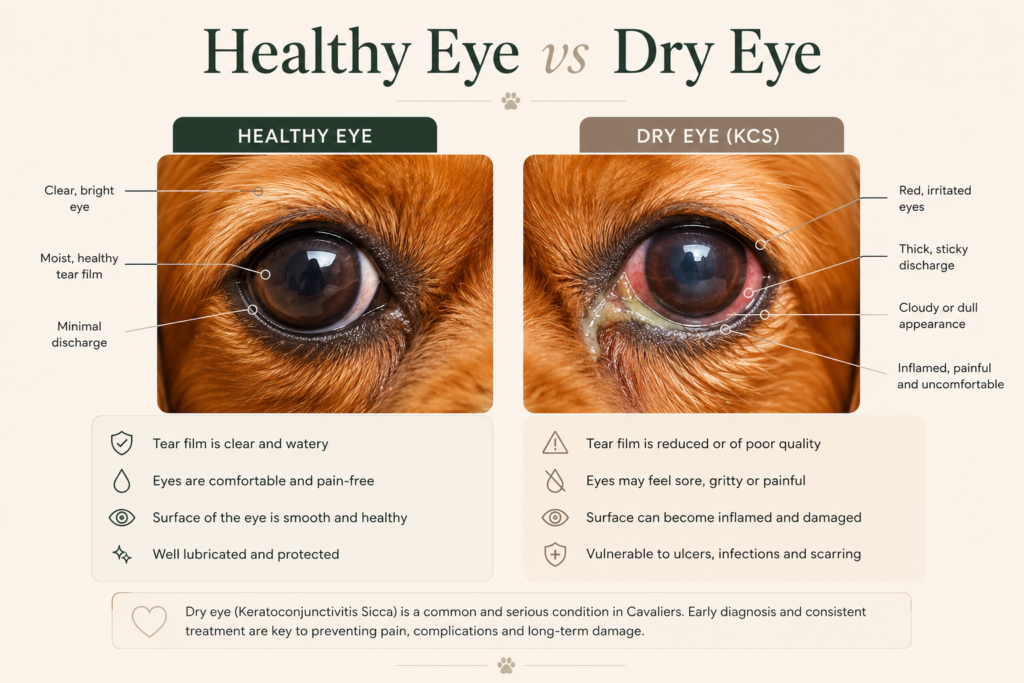
Dry eye is one of the most common eye conditions seen in Cavalier King Charles Spaniels, yet many owners do not realise how painful and serious it can become if left untreated. Known medically as keratoconjunctivitis sicca (KCS), dry eye occurs when the eyes cannot produce enough tears to keep the surface of the eye healthy, protected, and comfortable.
Tears do far more than simply “wet” the eye. They help nourish the cornea, flush away debris, protect against infection, and keep the eyes lubricated every time a dog blinks. Without adequate tear production, the eyes become dry, inflamed, irritated, and vulnerable to damage. Over time, this can lead to chronic pain, thick discharge, ulcers, scarring, and even permanent vision loss.
In Cavaliers, the most common cause of dry eye is immune-mediated disease, where the body’s immune system mistakenly attacks the tear glands themselves. The condition is lifelong and cannot be cured, but with early diagnosis, consistent treatment, and good home care, many dogs can continue to live very happy and comfortable lives.
At Bliss Cavalier Rescue, dry eye is something we see regularly within the breed, particularly in older dogs and those with other underlying inflammatory or immune-related conditions. The good news is that once owners understand the signs to look for and establish a good treatment routine, most dogs cope extremely well.
Dry Eye in Cavaliers: At a Glance
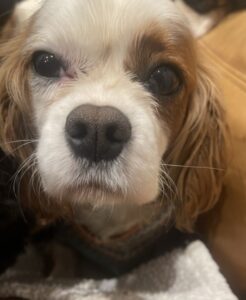
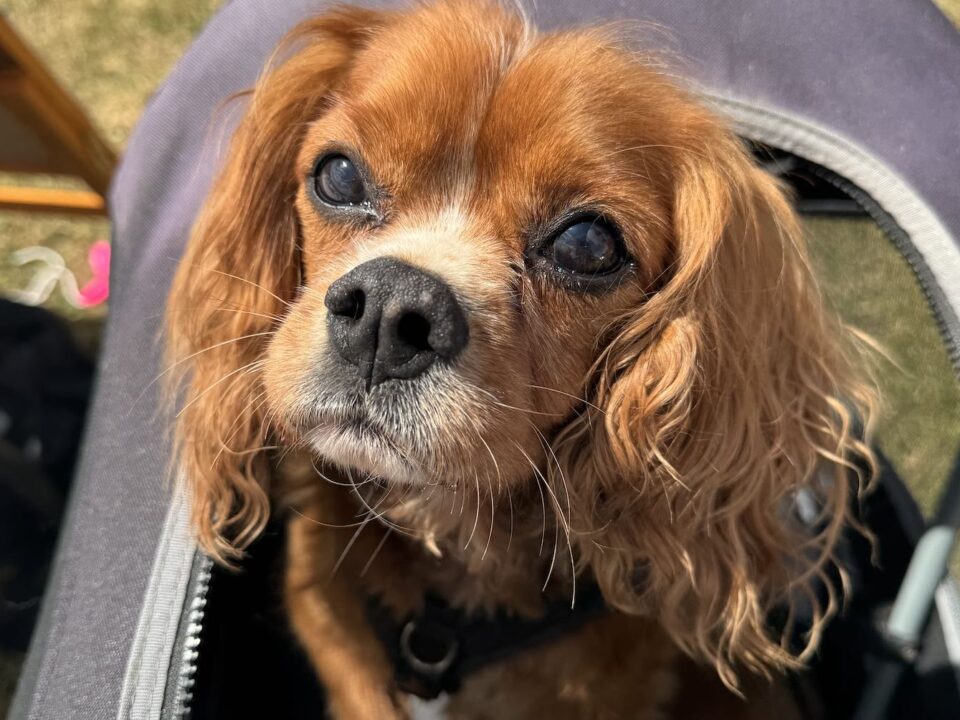
Some Cavaliers with dry eye may also develop secondary corneal ulcers or pigmentation across the eye, particularly if the condition has gone untreated for a long period of time. In more advanced cases, the surface of the eye can appear cloudy, sticky, or scarred.
If your dog suddenly develops a painful, red, squinting eye, veterinary attention should always be sought promptly, as ulcers and infections can worsen very quickly.
Why Are Cavaliers So Prone to Dry Eye?
Cavalier King Charles Spaniels are unfortunately one of the breeds more commonly affected by dry eye. While dry eye can occur in any dog, Cavaliers appear to have a clear predisposition to immune-mediated keratoconjunctivitis sicca (KCS), where the body’s immune system mistakenly attacks the tear glands.
Over time, this immune attack gradually damages the glands responsible for producing tears. As tear production decreases, the eyes lose their natural protection and lubrication, leading to chronic inflammation and discomfort.
Dry eye is also sometimes seen alongside other inflammatory or immune-related problems within the breed, including chronic skin disease, allergies, ear inflammation, and autoimmune conditions. Many Cavaliers affected by dry eye will require lifelong treatment to keep the eyes comfortable and prevent further damage.
Because the condition can develop slowly, owners do not always recognise the early signs immediately. Mild discharge, slightly red eyes, or increased blinking may initially seem minor, but these subtle symptoms can gradually progress over time.
At Bliss Cavalier Rescue, dry eye is something we encounter regularly, particularly in older Cavaliers and dogs with other chronic health conditions. The condition can look dramatic when poorly controlled, but many dogs improve significantly once the correct treatment routine is established.
How Is Dry Eye Diagnosed?
If your Cavalier is showing signs of dry eye, your vet can usually check tear production using a quick and simple test called a Schirmer Tear Test.
This involves placing a small strip of special paper just inside the lower eyelid for one minute. The paper absorbs the tears, and the vet then measures how far the moisture has travelled along the strip.
The test is quick, low-stress, and gives an immediate result. It can usually be done during a standard consultation and does not require sedation.
A Schirmer Tear Test helps your vet understand whether your dog is producing enough tears, whether the result is borderline, or whether dry eye is likely. Your vet may also examine the surface of the eye for signs of inflammation, ulcers, scarring, pigmentation, or infection.
Normal: 15mm or above
Borderline: 10–15mm
Dry eye likely: under 10mm
Treatment for Dry Eye in Cavaliers
Although dry eye cannot usually be cured, most Cavaliers can be managed very successfully with consistent treatment and regular monitoring. The aim of treatment is to increase tear production where possible, reduce inflammation, protect the surface of the eye, and prevent long-term damage.
Treatment is often lifelong, and consistency is extremely important. Missing medication or stopping treatment can quickly cause the eyes to become painful and inflamed again.
Daily Dry Eye Care Routine
Managing dry eye often becomes part of a dog’s normal daily routine. While it can sound overwhelming at first, most owners quickly become confident with applying medication and cleaning the eyes.
The exact routine will vary depending on how severe the condition is and what medications your vet has prescribed.
Daily Dry Eye Care Routine
Morning
- Clean away discharge gently
- Apply prescribed medication
- Use lubricating eye drops if needed
- Check for redness or squinting
During the Day
- Use artificial tears if prescribed
- Monitor for irritation outdoors
- Protect eyes in windy weather
- Watch for rubbing or discomfort
Evening
- Clean away any discharge
- Repeat prescribed treatments
- Apply lubricants before bedtime
- Check eyes remain comfortable
What Happens If Dry Eye Is Left Untreated?
Dry eye is not simply a cosmetic problem or a minor irritation. Without treatment, the surface of the eye becomes increasingly inflamed, damaged, and painful over time.
As the protective tear film disappears, the cornea becomes vulnerable to injury and infection. Thick discharge often builds up across the eye, and chronic inflammation can gradually lead to permanent changes in the appearance and health of the eye itself. 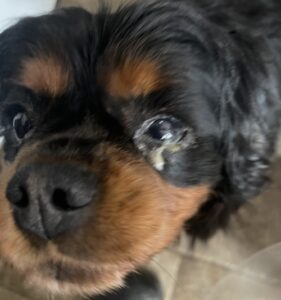
Untreated dry eye can result in:
- Recurrent eye infections
- Painful corneal ulcers
- Scarring across the surface of the eye
- Dark pigmentation developing over the cornea
- Chronic inflammation and discomfort
- Reduced vision or blindness
- In severe cases, rupture or loss of the eye
Because the condition is progressive, early diagnosis and consistent treatment make a significant difference to long-term comfort and eye health.
Some dogs with poorly controlled dry eye appear withdrawn, irritable, or quieter than usual simply because the eyes are chronically uncomfortable. Once treatment is started and the inflammation improves, many owners notice a significant improvement in their dog’s comfort and overall wellbeing.
If your Cavalier suddenly develops a red, painful, cloudy, or tightly closed eye, veterinary attention should always be sought promptly, as ulcers and infections can deteriorate very quickly.
Can Cavaliers Live Normally With Dry Eye?
Although dry eye is a lifelong condition, many Cavaliers go on to live very happy, comfortable, and normal lives once the condition is properly managed.
For most owners, the daily treatment routine quickly becomes part of normal life. Many dogs tolerate eye medication extremely well, particularly once the inflammation and discomfort begin to improve. In some cases, owners only realise how uncomfortable their dog had been once treatment starts and the eyes become calmer and healthier.
The most important factors are early diagnosis, consistency with medication, and regular veterinary monitoring. Dogs that receive prompt treatment before severe scarring or ulceration develops generally have the best long-term outlook.
At Bliss Cavalier Rescue, dry eye is something we commonly see within the breed, particularly in older Cavaliers and dogs with other chronic health conditions. While severe, untreated cases can look dramatic, many affected dogs improve significantly with the correct treatment plan and ongoing care.
With good management, many Cavaliers with dry eye continue to enjoy walks, play, cuddles, and a completely normal quality of life for many years.