Anxiety and Behaviour in Cavalier King Charles Spaniels: An Important Message for Owners

The Cost of Doing Nothing
29 May 2025
Insurance or Savings? Planning for a Cavalier’s Veterinary Care
10 February 2026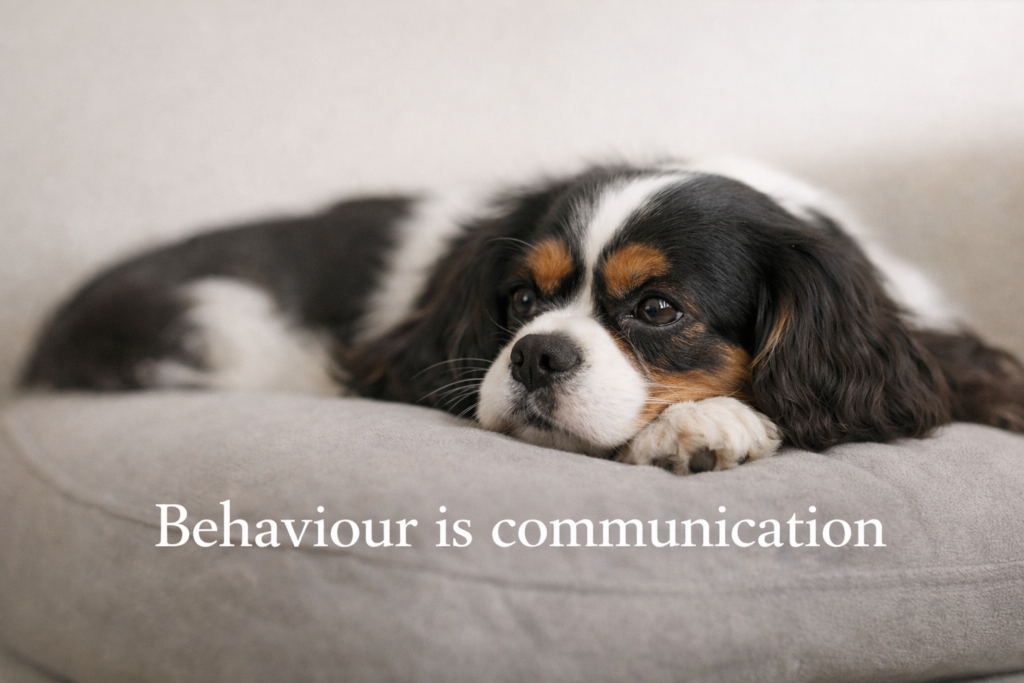
A gentle but important message about anxiety and behaviour in Cavaliers
Over recent months, we have seen a sharp and ongoing increase in the number of enquiries about Cavalier King Charles Spaniels who are struggling at home. Many of these dogs are described as anxious, overwhelmed, or snapping when they feel uncomfortable, particularly in busy households or around young children.
These enquiries are often made at a point of real distress for families. People are worried, exhausted, and frightened that they are doing something wrong or that their dog has “changed”. We want to reassure owners that they are not alone, and that these situations are sadly becoming far more common.
Behaviour is communication, not “bad behaviour”
We want to be very clear and very kind about this. Dogs do not behave this way to be difficult or disobedient. These dogs are not “bad”, and their behaviour is not a failure on anyone’s part.
In the vast majority of cases, behaviour is communication. It is a dog telling us that they are stressed, frightened, in pain, or unable to cope with a situation. Growling, snapping, freezing, or withdrawing are all forms of communication, often used when a dog feels they have no other option.
Ignoring or punishing these signals does not resolve the underlying problem and can make situations more dangerous by removing early warning signs.
Pain, health conditions, and behaviour changes in Cavaliers
Cavalier King Charles Spaniels are a sensitive breed and are sadly prone to a number of medical conditions that can cause discomfort or chronic pain. These include neurological conditions, spinal issues, ear disease, dental pain, and other health problems that are not always immediately obvious.
Pain and discomfort can significantly reduce a dog’s tolerance to handling, noise, unpredictability, and close contact. Activities that once seemed harmless, such as hugging, being disturbed while resting, or coping with sudden movement or noise, can become overwhelming.
In many cases, what is labelled as a “behaviour problem” is actually a pain problem, an anxiety problem, or a combination of both. This is why veterinary input is so important when behaviour changes occur.
Why behaviour difficulties often escalate in family homes
Busy households, particularly those with young children, elderly people, or individuals with additional support needs, can be especially challenging environments for sensitive dogs.
Children are naturally unpredictable. They move quickly, make noise, and often show affection in ways that dogs find uncomfortable. Even well-meaning interactions can be overwhelming for a dog who is already struggling physically or emotionally.
Without proper support, these situations can escalate over time, leading to increased anxiety, avoidance behaviours, or snapping. This does not mean the dog is unsafe by nature. It means the dog is overwhelmed and needs help.
Why rescue is not always the immediate solution
At the same time, we need to be honest about the reality of rescue capacity. Our rescue, like many others across the UK, is currently full of dogs with significant behavioural and emotional needs.
Rescue spaces are extremely limited, particularly for dogs who require long-term behavioural support, careful management, and specialist input. Many rescues are already caring for dogs who cannot be safely rehomed and who need lifelong sanctuary care.
Rescue cannot always step in when things become difficult, and it should not be viewed as a reset button when a dog is struggling. The most effective and kindest intervention is often early support within the home.
What to do if your Cavalier is struggling
If your Cavalier King Charles Spaniel is showing signs of anxiety, snapping, growling, or difficulty coping, the most important first step is not rescue, but professional support.
We strongly recommend:
-
Booking an urgent vet appointment to rule out pain or underlying medical causes
-
Asking your vet about referral to a veterinary behaviourist
-
Seeking help from a properly qualified behaviourist who works to evidence-based standards
These professionals are trained to assess both medical and emotional factors and to provide practical, realistic guidance. This is particularly important in households with children, where safety planning must be clear, evidence-based, and realistic.
Qualified behaviour support in the UK
Not all behaviour advice is equal. In the UK, we strongly recommend choosing professionals registered with recognised organisations.
It is important to understand that behaviour linked to pain, discomfort, or medical conditions cannot be trained away. No amount of obedience training, correction, or behaviour modification will resolve behaviour that is being driven by pain or physical discomfort.
Unqualified advice, particularly approaches that focus on suppression or “fixing” behaviour without addressing underlying causes, can make situations worse and increase risk. This is especially concerning in sensitive breeds such as Cavaliers, where pain-related behaviour is common.
Properly qualified behaviour professionals are trained to assess both medical and emotional factors together. They work alongside vets, recognise when pain or illness may be contributing, and prioritise safety, welfare, and realistic management strategies.
Keeping everyone safe while support is put in place
For families with young children, elderly people, or those with additional support needs, safety must always come first.
Close supervision, avoiding hugging or face-to-face contact, and ensuring dogs have access to quiet, child-free spaces are essential. These measures are not punishments. They are protective steps that help reduce stress and prevent incidents while support is being put in place.
Asking for help early makes a difference
We know how upsetting it can be when a dog you love is struggling. Many owners feel guilt, fear, or shame, and worry about being judged for speaking up.
Reaching out early, before a situation escalates, gives everyone the best chance of improvement. With the right veterinary and behavioural support, many dogs can become more comfortable, more confident, and better able to cope with their environment.
Supporting dogs where they are, with the right help and realistic expectations, is one of the most important and compassionate things we can do.
Frequently Asked Questions For Cavalier King Charles Spaniel Behaviour Problems
Is anxiety common in Cavalier King Charles Spaniels?
Cavaliers are a sensitive breed and may struggle with anxiety, especially during change, in busy households, or when they are feeling unwell or overwhelmed.
Why has my Cavalier started growling or snapping?
A sudden change in behaviour should always be taken seriously. In many cases it is linked to pain, fear, anxiety, or discomfort. Cavaliers are also prone to medical issues that can affect behaviour, so a vet check is an important first step.
Can behaviour linked to pain be trained away?
No. If behaviour is being driven by pain or physical discomfort, it cannot be trained away. Training can help with management and coping skills, but the underlying medical cause needs veterinary assessment and treatment.
Should I contact a rescue if my dog is struggling?
If your dog is struggling, professional veterinary and behavioural support should be the first step. Rescue spaces are extremely limited across the UK, especially for dogs with behavioural or emotional needs, and rescue cannot always step in immediately.
Do I need a trainer or a veterinary behaviourist?
If there is any chance the behaviour is linked to pain, anxiety, fear, or medical issues, ask your vet about referral to a veterinary behaviourist. If you are seeking behavioural support, choose someone properly qualified and registered with recognised organisations such as ABTC, CCAB, or APBC.