Insurance or Savings? Planning for a Cavalier’s Veterinary Care
10 February 2026
The Cost of Cute: When “Teddy Bear” Cavaliers Come at a Price
14 May 2026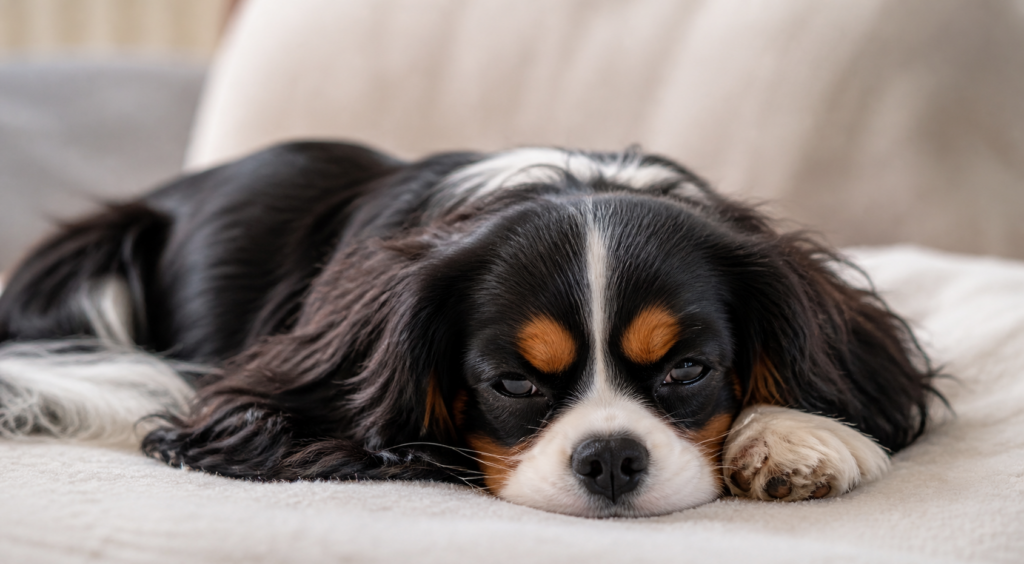
You’re sitting next to a dog.
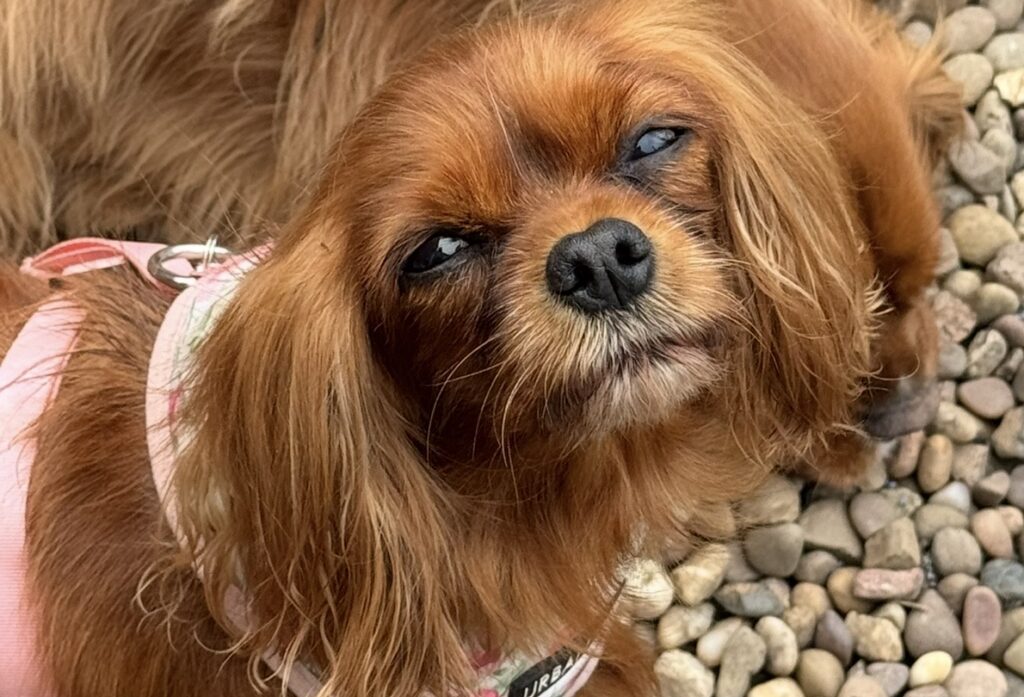
They’re resting. Maybe not fully asleep, but relaxed with their eyes half closed.
So naturally, you reach over.
A quick stroke.
Maybe you say their name.
Perhaps a scratch behind the ears.
And then they growl.
It’s low. Maybe brief. Enough to make you pause.
And suddenly, the dog is the problem.
The saying we’ve forgotten
There’s a reason the phrase “let sleeping dogs lie” has been around for generations.
It didn’t come from nowhere. It came from people observing dogs.
Dogs that were resting.
Dogs that were left alone.
Dogs that stayed calm because no one disturbed them.
Somewhere along the way, we seem to have lost that understanding.
We’ve started to treat dogs as if they are always available. Always ready for interaction. Always happy to be touched.
But just like us, dogs don’t feel the same way all the time.
And just like us, they don’t always want to be interrupted.
Not every dog wants attention
There’s a common assumption that dogs love affection all the time.
That if a dog is nearby, it’s an invitation.
That touching, stroking, and engaging is always welcome.
But that simply isn’t true.
Some dogs are very social and enjoy lots of interaction. Others are more reserved. Some are sensitive. Some just like their space.
And many dogs, regardless of personality, do not want to be disturbed when they are resting.
Just because a dog can be fussed does not mean they want to be.
That distinction matters more than people realise.
What happens before the growl
The growl is rarely the first thing a dog does.
By the time a dog growls, they have often already tried several quieter ways to communicate.
Things like:
- Turning their head away
- Closing their eyes more tightly
- Shifting their body
- Tensing slightly
- Moving away if they can
These signals are subtle. Easy to miss. Easy to dismiss.
But they are not random. They are communication.
They are the dog saying, in their own way, “I’m not comfortable” or “I’d like some space.”
When those signals are ignored or not noticed, the dog has to make a choice.
Stay uncomfortable or escalate.
That is when the growl happens.
The growl is not the problem
Growling has a reputation problem.
It is often labelled as aggression or bad behaviour. Something that needs to be corrected or stopped.
But a growl is communication.
It is a warning, not a failure.
It is the dog choosing to tell you how they feel rather than jumping straight to something more serious.
A growl does not mean a dog is aggressive. It means they are trying to avoid being pushed any further.
The real issue is not the growl. It is everything that happened before it.
When we ignore the early signs
Most people are not intentionally ignoring their dog.
They are not trying to make them uncomfortable.
But without realising it, they often push past those early signals.
They continue stroking.
They keep talking to the dog.
They try to engage more.
From the dog’s perspective, the message is not being heard.
So the communication becomes clearer. Louder. More obvious.
That is when the growl appears and it feels like it came out of nowhere.
But it didn’t. It built up quietly.
Why this matters more than people think
If a growl is misunderstood or punished, it can create bigger problems.
When a dog learns that growling leads to being told off or corrected, they may stop growling.
At first, that can look like an improvement.
But it isn’t.
The discomfort is still there. The need for space is still there.
The only thing that has changed is the warning.
When we suppress the growl, we remove the signal that something is wrong.
A dog without a warning system is far more likely to escalate straight to snapping or biting.
Not because they are worse, but because the quieter communication no longer works.
Children and dogs: where things often go wrong
This is especially important in homes with young children.
Children are naturally drawn to dogs. They want to stroke them, hug them, sit close to them, and be involved with them.
But children do not instinctively understand canine body language.
They are much more likely to:
- Approach a resting dog
- Touch a dog’s face or body unexpectedly
- Continue interacting when the dog is trying to disengage
- Miss the early warning signs completely
From the child’s perspective, they are being affectionate.
From the dog’s perspective, it can feel overwhelming and unpredictable.
Many incidents happen not because a dog is aggressive, but because the dog was pushed past their comfort level without anyone realising.
Supervision is essential, but so is education.
Children need to be taught that dogs are not always available for interaction. That resting dogs should be left alone. That walking away is a sign to stop.
And just as importantly, adults need to step in and advocate for the dog before it reaches the point of needing to growl.
The everyday situations we overlook
This is not about extreme cases.
It is about normal, everyday interactions.
Reaching to stroke a resting dog.
Calling them repeatedly.
Touching their face.
Interrupting their sleep.
Encouraging interaction when the dog is clearly disengaging.
Individually, these moments seem harmless.
But over time, they build up.
For some dogs, especially more sensitive ones, it becomes too much.
Not every dog wants to be the centre of attention.
Some would prefer to quietly remove themselves from it.
What dogs actually need from us
The solution is simple, but it does require a shift in mindset.
Dogs are not passive. They have preferences, limits, and boundaries.
Respecting those boundaries is what builds trust.
Simple changes make a big difference:
- Let dogs rest without interruption
- Call them over instead of going into their space
- Stop interaction when they disengage
- Notice the subtle signals, not just the obvious ones
The kindest thing you can do for some dogs is not give them more attention. It is less.
Let sleeping dogs lie
That old saying still holds up.
Not as a cliché, but as genuinely good advice.
When dogs are allowed to rest, to have space, and not be constantly engaged, they feel safer.
More relaxed. More in control.
Dogs that feel safe do not need to shout.
Final thought
Most dogs are not suddenly aggressive.
They have not changed overnight.
They have simply run out of quieter ways to ask.
We often think love means more attention.
But sometimes, the best way to show love is to give a dog space.